Variable Speed Operation
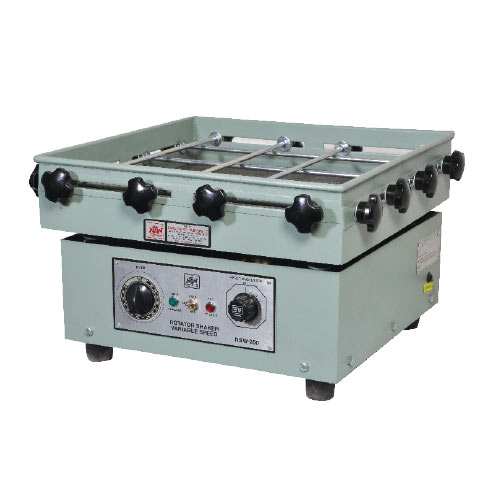
Selected NSW shaker models provide variable-speed operation for controlling agitation according to the laboratory application. The NSW-200 series provides 50–350 RPM operation.
Orbital Shaking
Orbital shaker models provide circular orbital movement for controlled mixing and agitation.
Reciprocal Shaking
Reciprocal models provide back-and-forth movement for applications requiring reciprocal agitation.
Fixed-Speed Operation
The VDRL shaker configuration is designed for fixed-speed rotational operation.
Electronic Speed Controller
Selected NSW rotary/orbital shakers incorporate an electronic speed controller for controlled operation.
RPM Monitoring
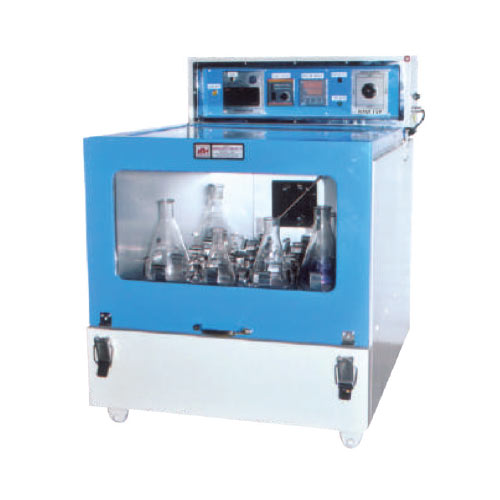
Selected shaking incubator models include an RPM meter, while digital RPM meters are available as an optional arrangement on the NSW-200 series.
Adjustable Shaking Platform
The NSW-200 series uses adjustable rods on the platform to accommodate conical flasks of different sizes.
Flask Holding Arrangements
Flask-holding arrangements can be provided according to the shaker configuration and application requirements.
Digital / Mechanical Timer
The NSW-200 series incorporates a mechanical timer adjustable from 0–60 minutes, with provision for continuous operation; a 999-minute digital timer is available as an option.
Temperature Control
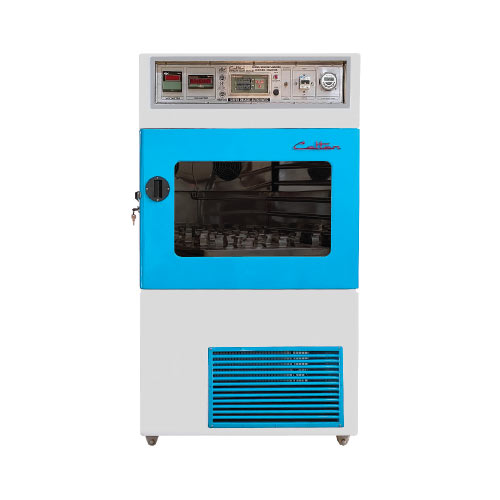
Shaking incubator models combine agitation with controlled temperature. The NSW-159 provides 5°C above ambient to 80°C ±0.5°C temperature control.
Microprocessor Temperature Controller
The NSW-159 uses a microprocessor electronic digital temperature indicator/controller.
Thermal Insulation
The NSW-159 uses 75 mm mineral-wool insulation to support controlled internal temperature conditions.
Stainless Steel Chamber Option
The NSW-159 can be supplied with a stainless steel 304-quality inner chamber as an optional arrangement.
PID Control
An optional microprocessor PID controller with ramp-and-soak profiles is available for the NSW-159.
Temperature Deviation Alarm
An electronic alarm can be provided as an optional feature if the temperature deviates beyond the specified limit.